LEVL (INGRI)
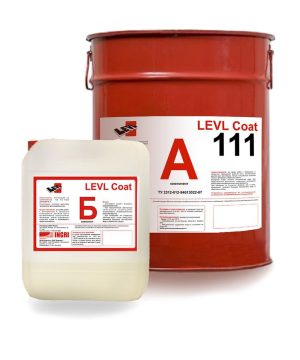
LEVL Coat 111 — epoxy impregnation for hardening concrete
Two-component epoxy impregnation for dustproofing and hardening porous mineral substrates; adhesion to concrete over 4.0 MPa.
Price on request
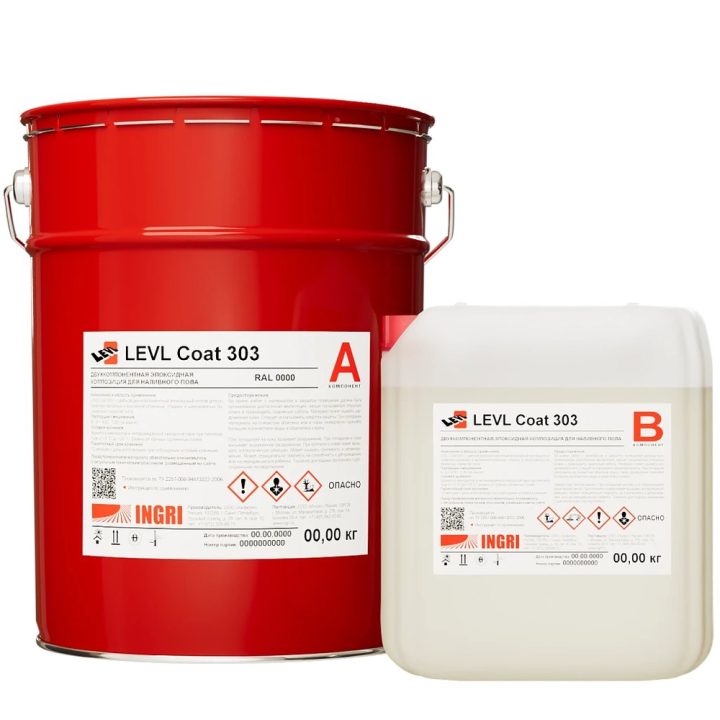
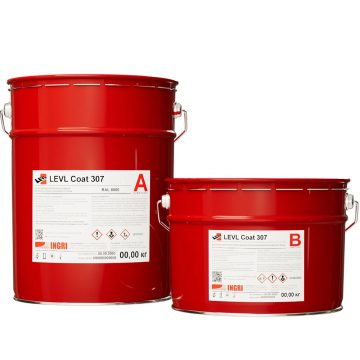
The main epoxy self-levelling floor of the range is LEVL Coat 303. It is used to make smooth and textured, unfilled and highly filled coatings over LEVL Coat 101, 102 W, 104 Rapid, 108 and other primers. Shore D hardness is at least 75, compressive strength 63 MPa, flexural 35 MPa; the coating is resistant to aggressive media, process water and bacteriological attack. It is used in offices, retail, healthcare, education, pharmaceutical and chemical plants, warehouses, covered car parks and rooms with a “wet cycle”.
| Manufacturer | LEVL (INGRI) — OOO “Ingri”, Saint Petersburg |
|---|---|
| Type | epoxy floors |
| Use | retail and public buildings, food and pharmaceutical, chemically resistant, warehouses and logistics, production workshops, car parks and ramps, wet rooms |
| Base | epoxy resin (two-component composition) |
| Colour | RAL colours; uniform gloss finish |
| Packaging | kits of 2.4 and 27 kg; A : B = 4.62 : 1.00 (by weight) |
| Application method | self-levelling and highly filled, smooth and textured floor coatings over LEVL Coat 101 / 102 W / 103 / 104 Rapid / 108 / 118 primer: pouring, squeegee or notched trowel, rolling with a spiked roller; filling with quartz sand 3.0 : 1.0; textured: broadcast to excess with 0.3–0.9 mm sand and a finishing coat by roller |
| Application temperature | air and substrate +10…+30 °C (recommended +17…+23 °C); material +15…+25 °C; air humidity no more than 80 %; substrate moisture no more than 5 % (primers 101/103/104 Rapid/108/118) or no more than 10 % (primer 102 W); 3 °C above the dew point |
| Curing | light loads / recoat interval: +10 °C ~32 h, +23 °C ~16 h, +30 °C ~12 h; foot traffic: ~6 / ~3 / ~2 days; full strength gain: ~10 / ~7 / ~5 days; next coat no earlier than 16 h and no later than 48 h at 23 °C |
| Key properties | Shore D hardness (7 days) at least 75; ultimate compressive strength (7 days) at least 63 MPa; flexural at least 35 MPa; tensile strength at break at least 16 MPa; adhesion to concrete at least 2.5 MPa (failure in the concrete); Taber abrasion (CS10 / 1000 g / 1000 rev.) no more than 55 mg; density 1.67 ± 0.1 g/cm³; non-volatile content at least 95 %; pot life +10 °C ~60 min, +20 °C ~30 min, +30 °C ~15 min; service temperature from −10 to +60 °C (highly filled: short-term up to +90 °C); chemical resistance: on request from Ingri |
| Layer thickness | self-levelling unfilled 1.5–3.0 mm; self-levelling filled (+33 % sand) 1.5–3.0 mm; highly filled 3–12 mm |
| Consumption | smooth unfilled 2 mm: 3.34 kg/m²; smooth filled 2 mm: 2.75 kg/m² + quartz sand 0.1–0.3 mm 0.92 kg/m²; textured highly filled 6 mm: 3.24 kg/m² + broadcast sand 0.3–0.9 mm 6.84 kg/m² + finishing coat 1.01 kg/m²; theoretically per 1 mm: unfilled 1.67 kg/m², filled (3.0 : 1.0) 1.83 kg/m² |
| Shelf life | 12 months from the date of manufacture; storage at +5…+25 °C |
| Standards | TU 2257-006-94613022-2006; works per SP 29.13330.2011 and SP 71.13330.2017; test methods GOST 31992.1, GOST R 31939, GOST 24621, GOST 11262, GOST 28574 |
Data from the manufacturer’s technical data sheet. The coating system, number of coats and quantity are selected for your project on request.
Two-component epoxy impregnation for dustproofing and hardening porous mineral substrates; adhesion to concrete over 4.0 MPa.
Lightweight epoxy compound with high quartz sand loading for warehouses, workshops, car parks and wet rooms; compressive strength 60 MPa.
One-component primer-impregnation for concrete and metal under polyurethane floors; next coat at +20 °C after just 3 hours.
Polyethylene fibres that make carboacrylates, adhesives, sealants and coatings thixotropic; chemically resistant, asbestos-free additive.
Economical hardening topping for workshops, warehouses and car parks with strength from 50 MPa and a service range from −40 to +200 °C.
Self-levelling compound under polymer and cementitious floors that can be laid at temperatures from +5 °C; bond to substrate 2 MPa.