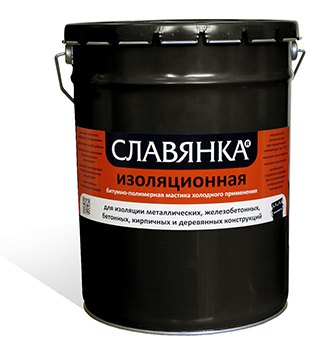
SLAVYANKA insulating mastic — bitumen-polymer mastic against moisture and corrosion
Bitumen-polymer mastic for protecting pipelines, tanks and underground structures from moisture, soil corrosion and stray currents.

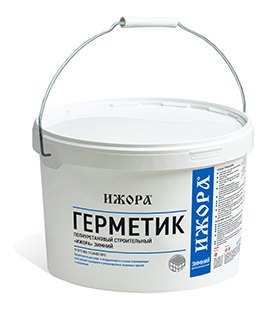
The winter version of Izhora polyurethane sealant makes it possible to seal joints when the air temperature is from −20 to +15 °C. At +6±1 °C the mix remains workable for at least 6 h, and it polymerises on average in 48 h at +15 °C and in 7 days at −20 °C. The field of application is the same as for the standard grade: expansion joints and butt joints of reinforced concrete, panel and window joints, cracks, pipe penetrations, and expansion joints of floors and road pavements not overlaid with asphalt concrete. The cured sealant withstands 25 % joint movement, elongates by 600 % and works from −65 to +90 °C.
| Manufacturer | Rastro (LAKHTA, SLAVYANKA, Izhora) — ZAO “Rastro”, Bolshaya Izhora |
|---|---|
| Type | joint sealants |
| Use | joints and junctions |
| Base | two-component polyurethane construction sealant for work at sub-zero temperatures down to −20 °C: component 1 — white paste (can be tinted), component 2 — transparent viscous liquid |
| Colour | standard: white 01 (RAL 1013), grey 02 (RAL 7046), light grey 09 (RAL 7038); to order: light blue, brick red, green, pink, yellow, lilac |
| Packaging | 12.5 kg kit: component 1 — 11.25 kg plastic euro bucket, component 2 — 1.25 kg plastic container (placed inside the bucket) |
| Application method | remove loose pieces, crumbling concrete and, if necessary, old sealant; treat the joint walls with a milling cutter to a minimum filling width of 10 mm; clean with a disc brush and compressed air, dry and heat with a torch; working temperature of the sealant not lower than the air temperature; pour all of component 2 into component 1 and mix for 6…8 min with a low-speed drill of at least 1.2 kW (paddle 80 mm); place a foamed polyethylene backer rod; apply with a spatula in a layer of at least 3 mm per pass; optimum joint depth to width ratio 1 : 3; do not apply on surfaces with free moisture; dilution is not permitted; do not use on bitumen and bitumen-polymer substrates |
| Application temperature | air −20…+15 °C, no precipitation (above +15 °C — standard Izhora) |
| Curing | pot life at least 6 h at (6±1) °C; full polymerisation on average 48 h at +15 °C and 7 days at −20 °C |
| Key properties | pot life at (6±1) °C at least 6 h; joint movement capability 25 %; consistency 30 mm; sag resistance (20±2 °C) 2 mm; cohesive failure; nominal tensile strength at break at 20 °C 0.5 MPa; elongation at break (dumbbell specimens, 20 °C) 600 %; Fraass breaking point −65 °C; nominal stress at 100 % elongation 0.5 MPa; bond strength to concrete 0.6 MPa, to metal 0.5 MPa; water absorption over 24 h 0.5 % by weight; density 1.4±0.1 kg/l; service −65…+90 °C; UV resistance; compliance with GOST 25621-83 |
| Layer thickness | layer at least 3 mm per pass; joint width at least 10 mm |
| Consumption | 0.27 kg/linear m (joint 24 mm × layer 8 mm); R = A × B × ρ / 1,000 (ρ ≈ 1.4 kg/l) |
| Shelf life | 12 months from the date of manufacture; store at up to +30 °C in closed rooms or under a canopy |
| Standards | TU 5772-026-11149403-2013; compliance with GOST 25621-83 |
Data from the manufacturer’s technical data sheet. The coating system, number of coats and quantity are selected for your project on request.
Bitumen-polymer mastic for protecting pipelines, tanks and underground structures from moisture, soil corrosion and stray currents.
Hot-pour bitumen-polymer sealant for road, airfield and bridge joints in regions with a winter five-day period down to −35 °C.
Rapid-hardening cement hydraulic plug for stopping active leaks through cracks, joints and holes; sets in 1–3 min.
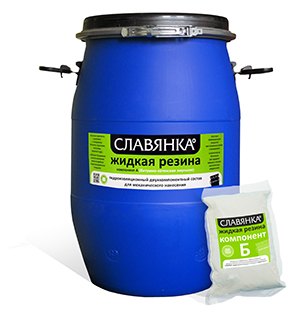
Two-component liquid rubber for mechanised spraying on foundations, tunnels, pools and roofs; elongation at break 1,500 %.
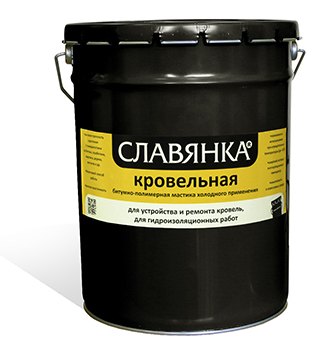
Cold bitumen-polymer mastic for repairing any roofs and building mastic roofs; elongation 1,500 %, service from −60 to +110 °C.
Hot bitumen-polymer sealant for joints in airfield, road and bridge pavements; flexibility is retained down to −27 °C.