LEVL (INGRI)
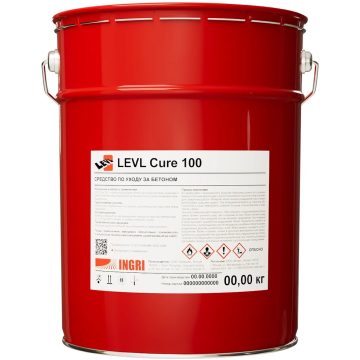
LEVL Cure 100 — curing compound for fresh concrete and toppings
Film-forming solvent-based acrylic compound for curing freshly placed concrete and toppings; dries to degree 3 in no more than 2 h.
Price on request
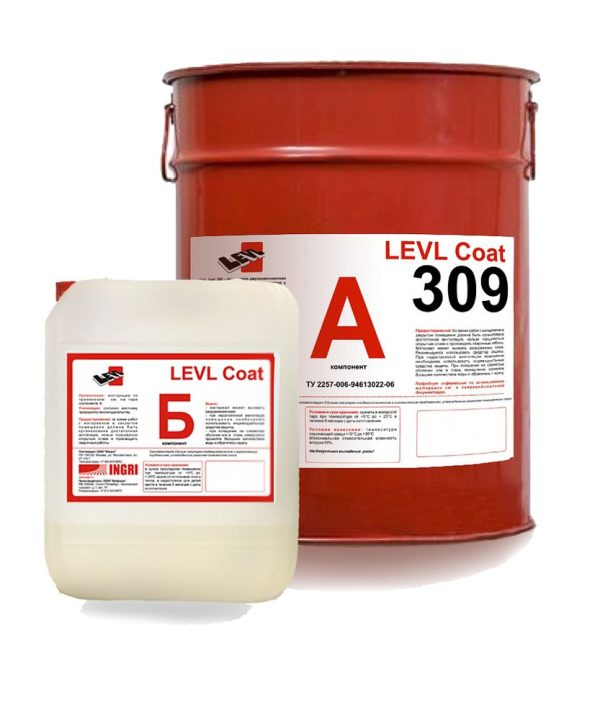
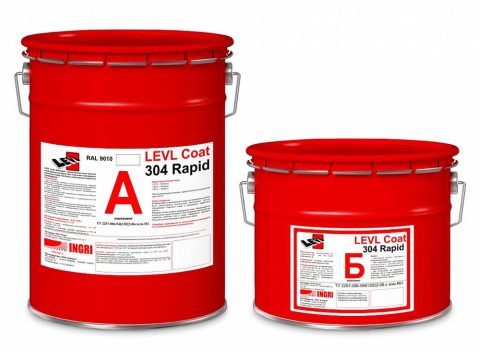
Warehouses, production and assembly premises where the floor is exposed to chemicals are coated with LEVL Coat 309. The epoxy compound with increased chemical resistance is poured over LEVL Coat 101, 103 or 106M primers and rolled with a spiked roller. Shore D hardness is at least 74, Taber abrasion up to 60 mg, adhesion 2.5 MPa; the coating resists yellowing and bridges cracks. A fire safety certificate with class KM2 is available; the list of resistance to specific substances is provided on request.
| Manufacturer | LEVL (INGRI) — OOO “Ingri”, Saint Petersburg |
|---|---|
| Type | epoxy floors |
| Use | chemically resistant, warehouses and logistics, production workshops, food and pharmaceutical, retail and public buildings |
| Base | chemically resistant epoxy compound |
| Packaging | A : B = 3.11 : 1 (by weight) |
| Application method | protective self-levelling coatings on concrete substrates of warehouse, production and assembly premises exposed to chemicals; over LEVL Coat 101, 103 or 106M primer; squeegee, rolling with a spiked roller |
| Application temperature | air and substrate +10…+30 °C; components +15…+25 °C (recommended +18…+25 °C); air humidity no more than 80 %; substrate moisture after priming no more than 1.5 % by weight; with primer 101/103 no more than 5.0 % by weight, with 106M no more than 10.0 % by weight; 3 °C above the dew point |
| Curing | light loads: +10 °C 32 h, +20 °C 16 h, +30 °C 12 h; foot traffic: 6 / 3 / 2 days; full loads: 10 / 7 / 5 days; next coat after 12–48 h at +20 °C |
| Key properties | High chemical resistance (list on request); Shore D hardness (7 days) at least 74; Taber abrasion resistance (CS10/1000 g/1000 rev.) no more than 60 mg; adhesion (over LC 101 primer) at least 2.5 MPa (failure in the concrete); elongation at break at least 5 %; tensile strength at break at least 10 MPa; density 1.60 ± 0.05 g/cm³; non-volatile content at least 96 %; resistance to yellowing; crack bridging; pot life +10 °C 60 min, +20 °C 30 min, +30 °C 15 min; fire hazard class KM2 |
| Layer thickness | admissible 1.5–5.0 mm; recommended 2.0 mm |
| Consumption | 1.60 kg/m² per 1 mm of thickness; example: wearing/coloured layer 1.5 mm — LEVL Coat 309 2.4 kg/m² (LEVL Coat 101 primer 0.35 kg/m² + sand 0.5 kg/m²) |
| Standards | TU 2257-006-94613022-06 with Amendment No. 1; fire safety KM2 (V2, T1, D2, RP1), certificate No. C-RU.PB58.V.02638; substrate per SP 71.13330.2017; test methods GOST 31992.1, GOST R 31939, GOST 28574, GOST 24621, GOST 11262 |
Data from the manufacturer’s technical data sheet. The coating system, number of coats and quantity are selected for your project on request.
Film-forming solvent-based acrylic compound for curing freshly placed concrete and toppings; dries to degree 3 in no more than 2 h.
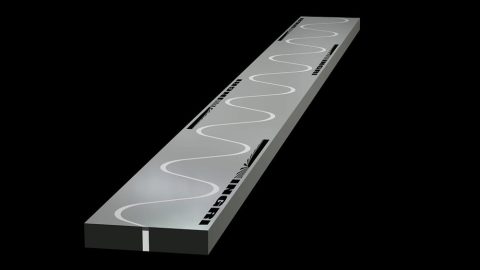
Polymer joint panel with elastic polyurethane infill for constructing and repairing thermal and shrinkage joints in warehouses and workshops.
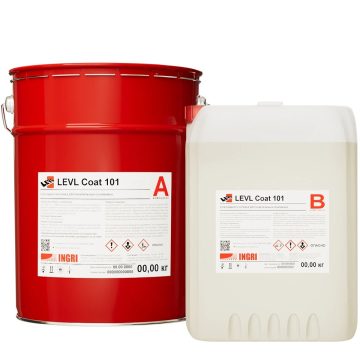
Epoxy primer under self-levelling epoxy and polyurethane floors; also a filler, cove compound and injection resin; adhesion from 2.5 MPa.
Coloured epoxy self-levelling floor for warehouses, workshops and car parks that takes full load after about 12 hours at +20 °C.
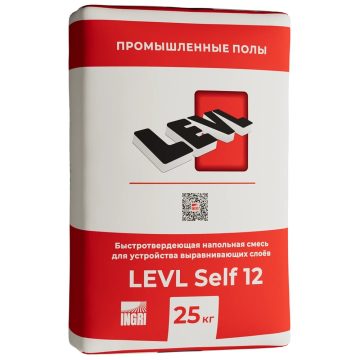
Cementitious levelling compound for levelling concrete before laying polymer and cementitious floors; subsequent layers after 2–3 days.
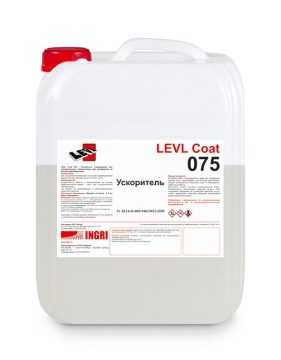
Liquid accelerator for laying LEVL Coat 171, 271 and 573 carboacrylate floors at temperatures from 0 to −10 °C.