Rastro (LAKHTA, SLAVYANKA, Izhora)
Izhora MBP-G/Shm-75 joint mastic — hot mastic for joints and cracks
Hot-pour bitumen-polymer mastic for joints and cracks in road pavements and junctions with tram rails; elasticity 90 %.
Price on request
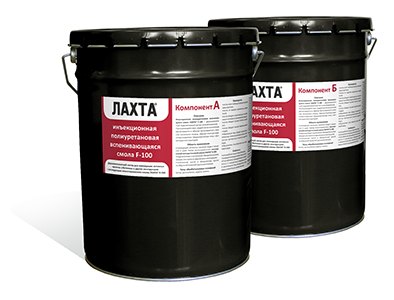
After polymerisation, LAKHTA R-200 resin turns into a dense elastic material without shrinkage that adheres firmly to the crack walls and remains watertight when the structure deforms. It is used to seal dry and damp cracks, joints and butt joints, including moving ones, to fill the hoses of injection systems in construction joints and to create a barrier against capillary moisture. If water is flowing actively, the leak is first stopped with F-100 resin or LAKHTA water plug. The mix viscosity is 150 mPa·s, the pot life at least 90 min, and full curing at +20 °C takes 12…24 h.
| Manufacturer | Rastro (LAKHTA, SLAVYANKA, Izhora) — ZAO “Rastro”, Bolshaya Izhora |
|---|---|
| Type | injection waterproofing |
| Use | joints and junctions, foundations and basements, leak repair |
| Base | two-component elastic polyurethane injection resin of low viscosity, free of organic solvents; components A and B — transparent liquids |
| Colour | components transparent |
| Packaging | 42.4 kg kit: component A — 20 kg metal euro bucket, component B — 22.4 kg euro bucket |
| Application method | single- or two-component pump; it is advisable to dry the crack with a gas torch or industrial hot-air gun; for active leaks or openings wider than 0.3 mm, first stop the water with LAKHTA F-100 resin or LAKHTA water plug; mix A:B 1:1 by volume (1:1.12 by weight) for at least 1 min with a 300 rpm mixer; inject until completely filled (packers without nipples); for a horizontal barrier against capillary moisture — drill holes at 15…30°, spacing 100…120 mm; mechanised only, with an injection pump; packers from Ø10 mm; drill holes at 30…45° intersecting the crack/joint in the middle of the thickness, depth usually 2/3 of the thickness, spacing not more than 1/2 of the thickness (15…30 cm), most often in a staggered pattern; clean the holes with compressed air or water; inject from bottom to top or from right to left; raise the pressure gradually, not above Pmax = 10 atm × concrete class / 3 (for B45 — not more than 150 atm); after polymerisation remove the packers and fill the holes with LAKHTA joint waterproofing or LAKHTA repair compounds; flush the equipment with diesel fuel or motor oil; condition the material at +17…+22 °C for one day beforehand; do not allow moisture to get into the components |
| Application temperature | not lower than +5 °C (surface and air) |
| Curing | pot life of the mix at least 90 min (+20 °C); end of polymerisation 12…24 h at +20 °C, up to 36 h at +8 °C |
| Key properties | dynamic viscosity of the mix 150 mPa·s (+20 °C); density of the mix 1.1 kg/dm³; ratio A:B 1:1.12 by weight, 1:1 by volume; after polymerisation — a dense elastic material with high adhesion, without shrinkage, withstands deformation while remaining watertight |
| Shelf life | 12 months from the date of manufacture; in dry rooms at +5…+30 °C in the manufacturer's packaging |
| Standards | TU 20.16.56-029-11149403-2018 |
Data from the manufacturer’s technical data sheet. The coating system, number of coats and quantity are selected for your project on request.
Hot-pour bitumen-polymer mastic for joints and cracks in road pavements and junctions with tram rails; elasticity 90 %.
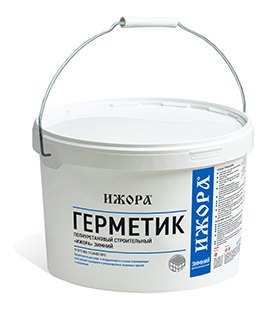
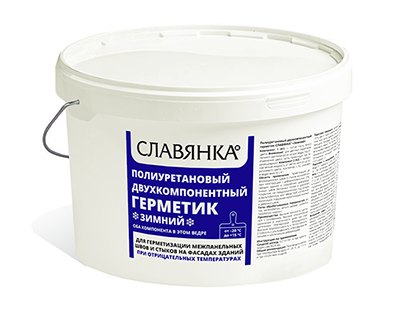
Winter two-component polyurethane sealant for reinforced concrete and facade joints; applied at air temperatures from −20 to +15 °C.
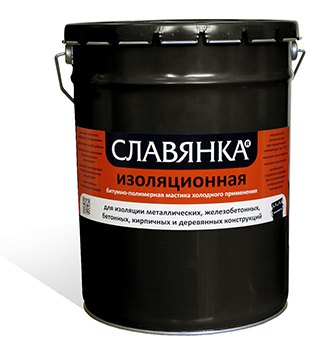
Hot-applied bitumen-rubber mastic for insulating pipelines, tanks and building structures against moisture and corrosion.
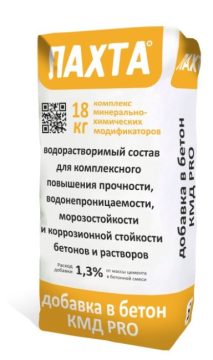
Mineral-chemical modifier for Portland cement concretes and mortars: water impermeability from W2 to W16 according to laboratory tests.
Winter polyurethane sealant for expansion and panel joints, applied at air temperatures from −20 to +15 °C.
Bitumen-polymer mastic for protecting pipelines, tanks and underground structures from moisture, soil corrosion and stray currents.